SEASONS has been reading C. Leonard Allen's book, Distant Voices. Several of the women who read theology have mentioned that they would like to read more about the "Holy Mysteries" spoken of Robert Richardson (1806 - 1876) in his five or ten minute meditations at the communion table. I found Richard's book available to read on-line or as a .pdf download at archive.org which is an excellent source for pre-1923 publications in the public domain which have not generated enough interest to be made available as kindle books. The link:
Richardson, Robert: Communings in the Sanctuary.
23 October 2013


Dealing with Division: Quotation
"I am as apt to be wrong as my brother."
"I propose never to stand identified with one special wing, branch, or party of the church. My aim is to preach the gospel, do the work of an evangelist, teach God's children how to live, and, as long as I live, to live as nearly an absolutely perfect life as possible."
T. B. Larimore (1843 - 1929)
from Allen, C. Leonard: Distant Voices. Discovering a Forgotten Past for a Changing Church. Abilene: ACU Press, 1993, p. 156
"I propose never to stand identified with one special wing, branch, or party of the church. My aim is to preach the gospel, do the work of an evangelist, teach God's children how to live, and, as long as I live, to live as nearly an absolutely perfect life as possible."
T. B. Larimore (1843 - 1929)
from Allen, C. Leonard: Distant Voices. Discovering a Forgotten Past for a Changing Church. Abilene: ACU Press, 1993, p. 156
18 October 2013
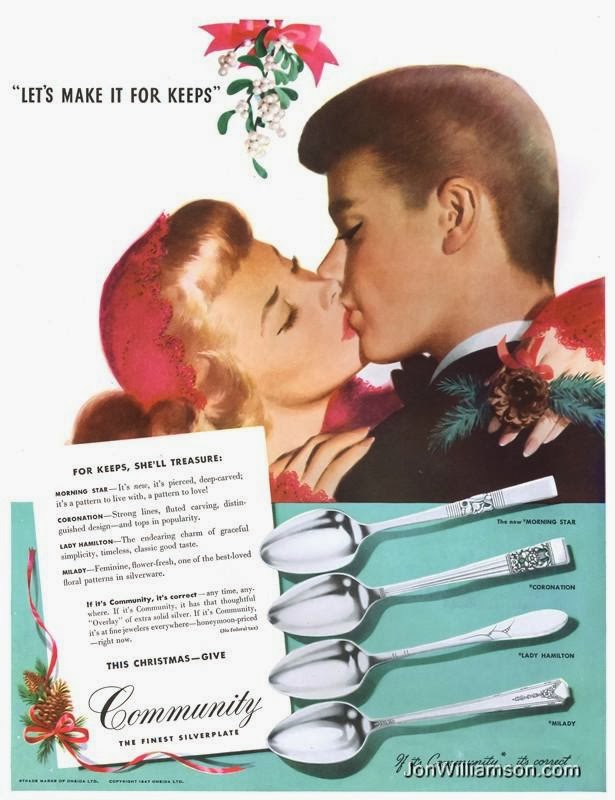
"...for keeps..."

I almost always manage to get a pic of my table setting but I'm so busy serving the meal that I never again think of grabbing a camera. {Sigh!}
I'll comfort myself with the thought that perhaps I'm just so entirely "in the moment" that I don't think of preserving the history. I do not much like to have my own photo taken so perhaps I'm being a considerate hostess. Yeah, let's go with that until I have serving staff--a butler, a footman, and a maid in a crisp white apron. Oh, yes! I do love the dining room in Downton Abbey. David will tell you that he once had to drag me out of shop in New Orleans that had a beautifully set dining table to seat twenty-four. "Nothing succeeds like excess."
For those readers who are not of the South, I pull a couple of books from my library, both funny but in many ways oh-too-true:


I particularly enjoy "Chapter Four: Silver Patterns" in Schwartz's book, p. 41 which describes Betty's "Rosepoint. Wallace International. Old-fashioned girls pick this pattern." It's my secret favorite sterling pattern. I might have chosen Rosepoint if I hadn't picked my silver pattern before I started to first grade.
From the opening paragraph of Being Dead: "Polishing silver is the Southern lady's version of grief therapy. [They] have a thing about polishing silver.... Maybe it has something to do with an atavistic memory of defending our silver from the Yankees, but it does ensure that the silver will be sparkling for the reception, which almost always follows a funeral."
My love for silverware predates my learning to read. Stacked under a table in the my grandparents' bedroom were magazines, mostly dating from WWII through the very early 1950s, which pre-school me leafed through. Since I could only read a few words, I was mostly looking at advertisements and making up stories about the pictures. My favorites were the Community silverware ads.
This is probably my all-time favorite image via http://envisioningtheamericandream.com/2012/05/29/victory-homes-for-the-vet/
 |
| "You hear his special footsteps (glory be that's your heart pounding). You see his special smile (he's been saving it for you). Your head finds its home-place on his very special shoulder. It's true--praise be--it's true--he's home for keeps...." |
The words "back home for keeps" were easy to read and some of the first I learned but I loved this ad with its dark-haired beauty and her sergeant in an army uniform because it reminded me of my parents' love story. Their courtship spanned his enlistment in the Army Air Corps and they married in 1947. At the end of each date she would say, "Gimme your dimes." He'd pull the change from his pocket and pick out the dimes, adding them to those she had collected. They were saving to buy their silver.
 They bought Milady which is the pattern near the bottom of the ad and was frequently featured in Community advertisements. I grew up using this silver--yes, every day. I still have a spoon from the original service. For my parents' 60th wedding anniversary I shopped eBay and bought them a almost-good-as-new service. Mostly as "show and tell" for their grandchildren. I also collected several pieces and make frequent use of the iced tea spoons, the soup spoons, the butter spreaders which are great for soft cheeses, and a few forks when my entertaining ambitions exceed my sterling.
 Milady was one of the first few patterns to come back into production following WWII. Whether a bride selected silverplate or sterling, most got promises until several years after the war. Oneida Ltd. (Yes! Oneida Community) manufactured this high quality silverplate and continued to advertise it through the war years but the plants had been retooled to make surgical instruments, combat knives, ammo clips, and shell casings, for the war effort as they had done during WWI.
Community/Oneida had other ad campaigns. "These are the things we are fighting for" was much like the more famous "Four Freedoms" series by Norman Rockwell.
The "Back Home for Keeps" series would give way to the post-war "Let's Make It for Keeps" which was also a favorite of mine. "The Happiest Brides have Community" is undoubtedly a true statement and it's great advertising but I was not too fond of that series; most of the illustrations were of a bride only. Somehow I always thought the guy was more important than the wedding or even the silverware.
Christmas advertisements frequently pictured multiple generations. The bride's mother and grandmother might also be dreaming of setting her table with Community silverplate.
 |
| Gran Cummings set her table with Oneida's Vernon silverplate. Her pattern was Romford. |
 |
| I was delighted to shop for and gift my God daughter with her grandmother's Community silver. The pattern is Old Bess. |
Most of today's brides select stainless. Most people entertain casually. One young friend presents beautiful tables using her collection of Fiesta pottery. I always enjoy such gatherings. But it is not my style. This is my style:
 |
| The salt and pepper shakers graced Gran Cummings's table. Silver: Prelude by International. 1939 China: Colburn by Noritake. 1960 - 1988 Crystal: Boopie by Anchor Hocking The turquoise plate is the first thing I bought at an antique auction. |
 |
| I sprinkled the pedestal tray with flor de sel because a bit of salt makes the good chocolate bloom. |
The words we read and the illustrations we admire help shape the people we become. I was perhaps overly influenced by those Community advertisments. As a child, I had no idea what it meant to be married but I was absolutely sure it involved good silver.

Scroll through this small gallery of my favorite "for keeps."


17 October 2013
Quotation: Books
"Better economize in the purchasing of furniture or carpets than scrimp in buying good books or papers.
"Our sitting-rooms need never be empty of guests or our libraries of society if the company of good books is admitted to them."
 p. 354
Benham, Georgene Corry: Polite Life or What is Right in Etiquette and The Social Arts. Illustrated. Copyright 1895 by Robt. O. Law.
A book in my collection written for "the ladies and gentlemen, boys and girls of America."
The 1891 edition is available in digital text: from Google books.
http://books.google.com/books?id=GSYMAAAAIAAJ&pg=PP1&lpg=PP1&dq=Benham+georgene+corry&source=bl&ots=UCbaC66bhZ&sig=YmpT3JGmrTf5dmz4rwUEE4JYYhM&hl=en&sa=X&ei=uNhfUojMNaKo2wW4-oC4Dw&ved=0CCkQ6AEwADgK#v=onepage&q=Benham%20georgene%20corry&f=false
 |
| Mrs. Georgene Corry Benham from the frontis with signature |
09 October 2013
Research notes: biblical honey
Random thoughts:
“…milk
and honey…” combines the produce of herd and agriculture.There is honey from domestic hives but also from wild bees of woodland and dessert.
Honey may have been a sacrifice to the "hill top gods" of Canaan.
Despite my previous blog, it is possible that there is provision for today e.g. milk and provision for tomorrow e.g. honey in the phrase.
The Proverbs and Song of Songs reference may be rife with sexual innuendo.
Biblical Citations:
Hebrew דְּבָשׁ debash Strong # 1706
“honey/honeycomb” from “to be gummy” e.g. “honey” from its stickiness and
by analogy “syrup” also “date honey” “grape honey”
Genesis 43:11
“a little balm and a little honey”
Exodus 3:8 “a
land flowing with milk and honey”3:17
13:5
33:3
Levit 20:24
Jerem 11:5
32:22
Num 13:27 “surely it floweth with milk and honey”
14:8 “land which floweth with milk and honey”
16:13
16:14
Deut 6:3
11:9 “land that floweth with milk and honey”
26:9
26:15
27:3
31:20
Josh 5:6
Ezek 20:6 “for them, flowing with milk and honey”
27:17 “for them, flowing with milk and honey”
Deut 8:8 “a
land of olive and honey”
II Kings 18:32
Deut 32:13 “him
to suck honey out of the rock” Rock = Strong's 6697
Psalm 81:16 “with honey out of the rock”http://biblesuite.com/hebrew/6697.htm
Hebrew צוּר tsur “rock” “stone” “strength” “cliff” “refuge”
14:18 “what is sweeter than honey”
14:29 “I tasted a little of this honey”
14:43 “I did taste a little honey”
II Chron 31:5 “of
corn, wine, and oil and honey”
Prov 24:13 “My
son, eat though honey because it is”
25:16 “Hast thou found honey?”25:27 “It is not good to eat much honey”
Isaiah 7:15 “honey shall he eat, that he may know”
7:22 “honey shall everyone eat that is”
16:13 “thou didst eat fine flour and honey”
16:19 “fine flour and oil and honey”
27:17 “what of Minnith and Pannag and honey”
Honey with Honeycomb
Strong's # 5317 unless noted otherwise:
http://biblesuite.com/hebrew/5317.htm
Psalm 19:10 “sweeter
also than honey in the honey comb”
16:24 “pleasant words are as an honeycomb”
24:13 “honeycomb which is sweet to thy tongue”
27:7 “the full soul loatheth an honeycomb”
02 October 2013
Gathering honey from a weed...
"They whom truth and wisdom lead, can gather honey from a weed..." William Cowper.
Several times in the last couple of months, I've come across references claiming that honey has no expiration date, a shelf life of thousands of years. Such references pepper the websites of beekeepers and honey vendors. It is part of the legend and lore of honey. I offer as an example this link to Natasha Geiling's "Surprising Science" at the Smithsonian blog: "The Science Behind Honey's Eternal Shelf Life" which appeared in my facebook feed.
I fell in love with this idea and became like Cowper's "bee of most discerning taste Perceiv'd the fragrance as he pass'd" and, in my mind, my blog post was half written. The "eternal shelf life of honey" would provide a profound twist to the biblical phrase "a land flowing with milk and honey." Like a seeker of truth and a wise researcher, I decided to check and confirm facts and references before I started writing. My favorite part of any project is always the research which is probably why I so seldom write.
Alas, my lovely blog is not to be and like Cowper's bee "Thus having wasted half the day, He trimmed his flight another way."
My blog must be about the evaluation of sources and the development of reliable references.
But first a meander:
I have always loved honey. I love listening to my mother, Dorthy Wieland Cummings, tell tales of her childhood in Leon County, Texas, where her father kept bees. She and Aunt Gladys used their "shooters" to break up the swarming hives. Grandma filtered the honey through cheesecloth and bottled it in canning jars sealed with beeswax. I remember Daddy once bringing home a giant honey comb and how we children chewed the sweet wax and honey dripped down our chins while mother followed in her mother's footsteps. What a treat with hot, buttered biscuits throughout the winter! We could taste the flowers.
My friends know that a jar of honey is always a most welcome gift from their travels.
I know that unadulterated honey does indeed have a very long shelf life if not exposed to air; it may crystallize but it does not spoil. I have opened a well-sealed glass jar of honey stored in a cool pantry almost a decade after I put it on a shelf and forgot it. The honey had darkened a bit but was otherwise still good. A decade is far short however of a millennium. I am skeptical of "eternal shelf life."
As a former medical librarian, I know that honey has medicinal uses, both historically and currently. Honey's curative powers are written on Sumerian clay tablets (1500 - 1250 B.C.E.) and in in the earliest extant medical texts. Many of the cures in the Papyrus Ebers (1550 B.C.E.) mention honey. Its antibacterial properties, its wound protection, and its use to heal skin irritations is well documented. I myself often use honey as an ingredient in herbal tesanes and homemade cough syrups, and I often mix honey with yogurt and oatmeal as a hydrating/calming facial.
Honey was also used during the process of embalming and mummification in ancient Egypt. Honey is often included among the provisions for the afterlife and has been found not only in the Egyptian tombs but in Mayan tombs and in other ancient burial sites.
It is not unusual to find containers, stained with honey, which contain pollen from the flowers that fed the ancient bees. Paleobotanists identify the plants of long gone meadows, reconstructing climates. Here is a link to one such recent discovery of a tomb in the Caucasus: http://www.eurasianet.org/node/65204.
Jars marked with bees indicate "good honey" and "honey from the dessert."
Honey stains and pollen are not the same as jars full of honey that remains edible after millennia.
Multiple references flood the pages of my carefully constructed Google searches but I am not finding credible sources with the citations to original publications that my librarian's soul craves.
I returned to the original Smithsonian blog. The expert quoted in the blog (Amina Harris with University of California, Davis) is credible; the science seems solid but it was the first paragraph of the article that had grabbed my attention:
Why did I not take the information at face value?
I wanted it to be true and I badly wanted to be able to use it to make my exegetical point which is all the more reason to be skeptical. As a researcher, I was taught by my friend and mentor, Rice University Professor Robert L. Patten, to question assumptions, especially my own.
The Smithsonian blogger offered the introductory paragraph as an item of common knowledge, but:
"Young Egypt has a well-developed sweet tooth. The ancient Egyptians were likewise fond of sweets. One of the most remarkable finds ever made by archaeologists was a jar of honey, still liquid and still preserving its characteristic scent after 3,300 years, in the tomb of Yuaa and Thuaa, the parents of Queen Tiyi."
I am now reasonably sure that I have found the source of the legend and lore. Google search "Yuaa Thuaa tomb" and at last a reliable source with a proper bibliography yields two citations:
Now let's hope that these books are available on-line or I'll have to "find it a library." I love Google books and the multiplicity of on-line archives!
In Quibell's book, I find this note on page 75:
"Oil from alabaster vase in tomb of Yuaa
The sample, of which there was only about 5cc., was very rancid and sticky, and in appearance resembled honey. The smell and taste however were both oily..."
Taste! They tasted of something they found in a tomb? Oh, my!
But whatever it was, it was not honey.
And, in the book by Theodore M. Davis and on page xxxiii I read:
"I looked into the vase... it contained only a liquid which was first thought to be honey, but was subsequently proved to be natron."
What is natron? It ain't honey. https://en.wikipedia.org/wiki/Natron
[November 2018: with thanks to an anonymous comment: Post was edited to change the citation link.]
Once again, lore and legend--no matter how charming--must yield to careful bibliographic practices.
So end the wanderings of this "bee of most discerning taste"
who has "wasted" far more than " half the day," and who will now have to hope that one day all this knowledge about tombs and honey will be half as useful as it has been interesting, to me at least.
"They whom truth and wisdom lead, can gather honey from a weed..."
William Cowper, 1731 - 1800.
Follow this link to read Cowper's poem: "The Pine Apple and the Bee. "
http://quod.lib.umich.edu/e/ecco/004792651.0001.000/1:30?rgn=div1;view=fulltext
Several times in the last couple of months, I've come across references claiming that honey has no expiration date, a shelf life of thousands of years. Such references pepper the websites of beekeepers and honey vendors. It is part of the legend and lore of honey. I offer as an example this link to Natasha Geiling's "Surprising Science" at the Smithsonian blog: "The Science Behind Honey's Eternal Shelf Life" which appeared in my facebook feed.
I fell in love with this idea and became like Cowper's "bee of most discerning taste Perceiv'd the fragrance as he pass'd" and, in my mind, my blog post was half written. The "eternal shelf life of honey" would provide a profound twist to the biblical phrase "a land flowing with milk and honey." Like a seeker of truth and a wise researcher, I decided to check and confirm facts and references before I started writing. My favorite part of any project is always the research which is probably why I so seldom write.
Alas, my lovely blog is not to be and like Cowper's bee "Thus having wasted half the day, He trimmed his flight another way."
My blog must be about the evaluation of sources and the development of reliable references.
But first a meander:
I have always loved honey. I love listening to my mother, Dorthy Wieland Cummings, tell tales of her childhood in Leon County, Texas, where her father kept bees. She and Aunt Gladys used their "shooters" to break up the swarming hives. Grandma filtered the honey through cheesecloth and bottled it in canning jars sealed with beeswax. I remember Daddy once bringing home a giant honey comb and how we children chewed the sweet wax and honey dripped down our chins while mother followed in her mother's footsteps. What a treat with hot, buttered biscuits throughout the winter! We could taste the flowers.
My friends know that a jar of honey is always a most welcome gift from their travels.
I know that unadulterated honey does indeed have a very long shelf life if not exposed to air; it may crystallize but it does not spoil. I have opened a well-sealed glass jar of honey stored in a cool pantry almost a decade after I put it on a shelf and forgot it. The honey had darkened a bit but was otherwise still good. A decade is far short however of a millennium. I am skeptical of "eternal shelf life."
 |
| Cartouches of Ramses II, Karnak, showing honey bees. A public domain photo: http://commons.wikimedia.org/wiki/File:Karnak_titul_ramses_2c.jpg |

Honey was also used during the process of embalming and mummification in ancient Egypt. Honey is often included among the provisions for the afterlife and has been found not only in the Egyptian tombs but in Mayan tombs and in other ancient burial sites.
It is not unusual to find containers, stained with honey, which contain pollen from the flowers that fed the ancient bees. Paleobotanists identify the plants of long gone meadows, reconstructing climates. Here is a link to one such recent discovery of a tomb in the Caucasus: http://www.eurasianet.org/node/65204.
Jars marked with bees indicate "good honey" and "honey from the dessert."
Honey stains and pollen are not the same as jars full of honey that remains edible after millennia.
Multiple references flood the pages of my carefully constructed Google searches but I am not finding credible sources with the citations to original publications that my librarian's soul craves.
I returned to the original Smithsonian blog. The expert quoted in the blog (Amina Harris with University of California, Davis) is credible; the science seems solid but it was the first paragraph of the article that had grabbed my attention:
"Modern archaeologists, excavating ancient Egyptian tombs, have often found something unexpected amongst the tombs’ artifacts: pots of honey, thousands of years old, and yet still preserved. Through millennia, the archaeologists discover, the food remains unspoiled, an unmistakable testament to the eternal shelf-life of honey."
I need that connection to Egypt at the time of The Exodus to make my argument and my carefully constructed searches were not yielding results.Why did I not take the information at face value?
I wanted it to be true and I badly wanted to be able to use it to make my exegetical point which is all the more reason to be skeptical. As a researcher, I was taught by my friend and mentor, Rice University Professor Robert L. Patten, to question assumptions, especially my own.
The Smithsonian blogger offered the introductory paragraph as an item of common knowledge, but:
- It was not part of the information offered by the credible expert.
- There was no reference, no footnote, no link given for the information.
- Countless websites offered by beekeepers, honey vendors, alternative medicine health care practitioners also contained this assertion, often verbatim, of honey found in Egyptian tombs but bore no citations to the original archaeological publications. Neither did they offer the name of a single one of these discoverers.
- Repeating something does not make it true. Neither do 300,000+ search engine hits. Internet searches open up a world of information, often raw, unfiltered, and too often incorrect. One of the reasons, I could not find what I was seeking because of the sheer volume hits.
- Smithsonian Magazine is a highly respected publication but a blog on the website is not the same as the edited and vetted publication. A periodical intended primarily as a public relations tool for the general reader is not as trusted a source as a peer-reviewed journal.
- Lore and legend may be charming but I need confirmation from a respected archeology journal or text.
"Young Egypt has a well-developed sweet tooth. The ancient Egyptians were likewise fond of sweets. One of the most remarkable finds ever made by archaeologists was a jar of honey, still liquid and still preserving its characteristic scent after 3,300 years, in the tomb of Yuaa and Thuaa, the parents of Queen Tiyi."
I am now reasonably sure that I have found the source of the legend and lore. Google search "Yuaa Thuaa tomb" and at last a reliable source with a proper bibliography yields two citations:
- Quibell, J. E.: The Tomb of Yuaa and Thuii. Cairo 1908.
- Davis, T. M.: The Tomb of Iouiya and Touiyou. London 1907.
Now let's hope that these books are available on-line or I'll have to "find it a library." I love Google books and the multiplicity of on-line archives!
In Quibell's book, I find this note on page 75:
"Oil from alabaster vase in tomb of Yuaa
The sample, of which there was only about 5cc., was very rancid and sticky, and in appearance resembled honey. The smell and taste however were both oily..."
Taste! They tasted of something they found in a tomb? Oh, my!
But whatever it was, it was not honey.
And, in the book by Theodore M. Davis and on page xxxiii I read:
"I looked into the vase... it contained only a liquid which was first thought to be honey, but was subsequently proved to be natron."
What is natron? It ain't honey. https://en.wikipedia.org/wiki/Natron
[November 2018: with thanks to an anonymous comment: Post was edited to change the citation link.]
Once again, lore and legend--no matter how charming--must yield to careful bibliographic practices.
So end the wanderings of this "bee of most discerning taste"
who has "wasted" far more than " half the day," and who will now have to hope that one day all this knowledge about tombs and honey will be half as useful as it has been interesting, to me at least.
"They whom truth and wisdom lead, can gather honey from a weed..."
William Cowper, 1731 - 1800.
Follow this link to read Cowper's poem: "The Pine Apple and the Bee. "
http://quod.lib.umich.edu/e/ecco/004792651.0001.000/1:30?rgn=div1;view=fulltext
Subscribe to:
Posts (Atom)